
Optimizing Global Content Delivery with Region-Aware Infrastructure
Gone are the days when global delivery of content merely meant publishing a website and making it available everywhere. Today, users across various locations expect rapid load times, localized messaging, compliant data collection and processing and uninterrupted digital experiences as if they were accessing content down the street from the office. For enterprise, however, this presents a technical and operational conundrum: how to maintain such high levels of performance without duplicating the necessary infrastructure (and driving up costs) or neglecting modern governance and compliance requirements to avoid legal troubles.
Region-aware infrastructure is the first step towards scalable, global delivery. By ensuring that hosting solutions, CDNs and API routing are supported by structure and content that are also regionally-oriented, performance can be balanced with compliance. Organizations that leverage the opportunity to compartmentalize launches and development internationally can instead utilize a comprehensive framework that automatically adjusts based upon what a region requires. Therefore, speed and accuracy become organizational hallmarks that guarantee enhanced performance in various markets.
How Content Performance Is Impacted by Geographic Proximity
Content performance is impacted by geographical proximity. When content is served from a data center far away from the end user, load times suffer, increasing latency. This is especially true in the global economy where a slow-loading asset can mean lower engagement, decreased sales conversions or SEO penalties, which is why many organizations choose to Switch from WordPress to headless CMS to leverage faster, globally distributed content delivery.
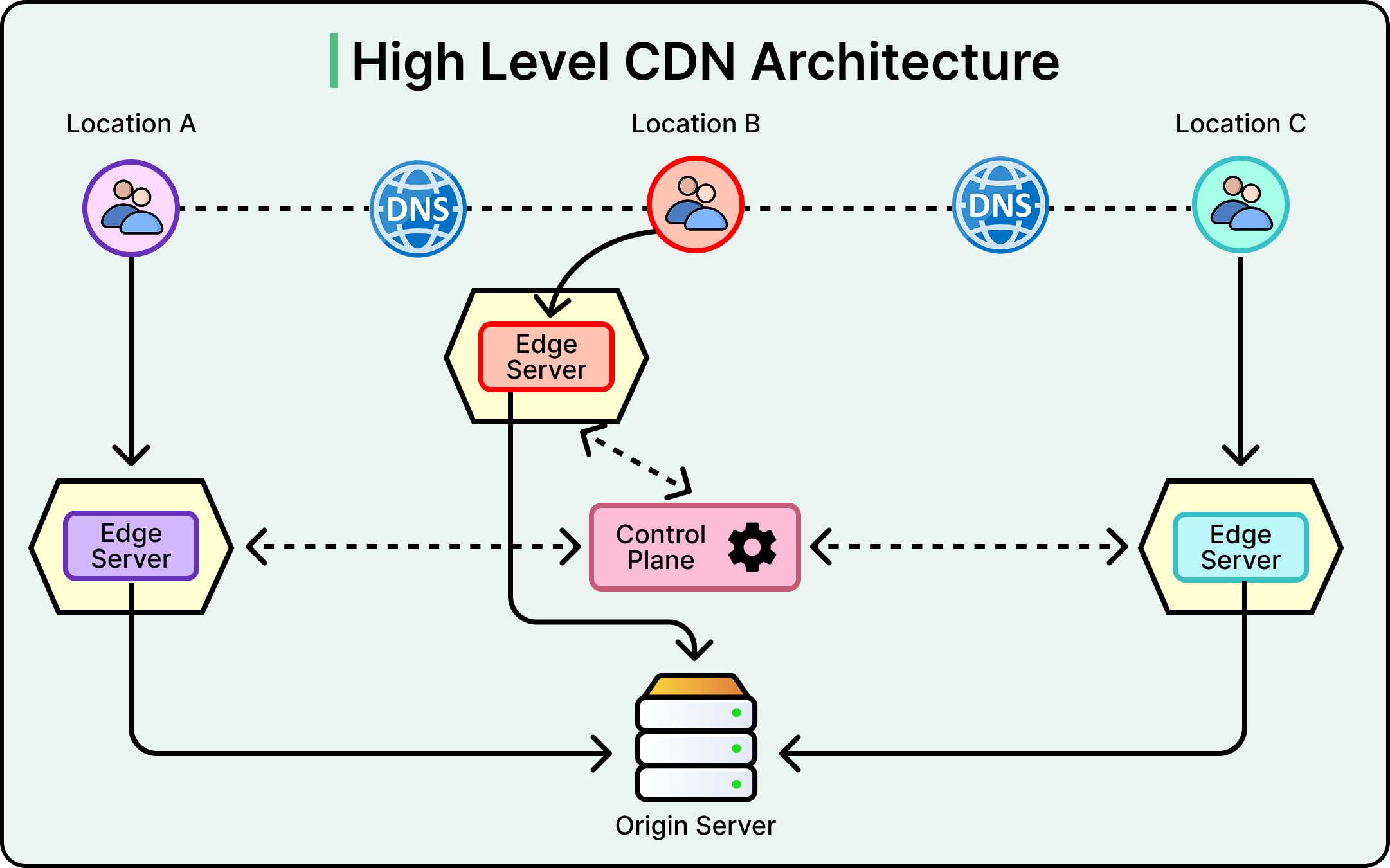
This obstacle is mitigated through region-aware infrastructure. This usually refers to a distributed hosting environment, meaning CDNs cache assets and store them in systems closer to the edge user. Instead of one central request coming from everyone around the world, it can be broken down more efficiently with a CD at the edge request, meaning the content is cached at that specific edge node.
This inevitably increases responsiveness and reliability. One user in Asia gets the same content as someone in Europe or North America, but they get it from a server that is much closer to home, minimizing delay. For international organizations, this means that not everything must be redundantly built across the world, but instead cached and more quickly made accessible from various locations.
How Global Delivery Infrastructure Supports Structured Content
Structured content is better integrated into a situation with region-aware infrastructure. If content is inherently structured, it exists in a modular form within a single source content repository. This means it can dynamically be sent to different frontends and regional nodes through APIs.
No one needs to rebuild a version elsewhere because versioning exists through one source under governance. Thus, in a regionally aware system, there becomes a centralized content repository through which performance can be assessed for centralized, deliverable content and proper governance.
Similarly, when content is dynamic yet structured, it can be requested on the fly. Region a user is in may determine which language version of content a user receives or which module of a website is required. This means that there is no need to regionalize for performance and structural purposes; the physical realities of existing content in one space and delivering it through a global network are enough to justify the separation.
SEO Benefits of Region-Aware Infrastructure
Search engines inherently favor fast-loading and reliable sites as per algorithmic factors. Therefore, when implementing globalized SEO strategies, if content performance varies by region, sites can under- or overperform relative to their target market.
An international company can get the asset it wants in one country, but if it loads slowly in another due to time zones, there are fewer chances of full search success for a company attempting to go international.
This is where region-aware infrastructure comes in. Between accessible CDNs to reduce latency and server configurations that help with reliability when needed, performance can be evened across the board. In addition, structured URL hierarchies and finer regional targeting can help ensure visibility factors from an international perspective.
When organization infrastructure complements international realities, there are fewer performance discrepancies that reduce success from a global search perspective. It makes more sense to integrate international efforts into logical facilitation instead of allowing potential obstacles to get in the way of an organization’s international ambitions. Thus, performance becomes user- and algorithm-favored with proper delivery considerations.
Support Compliance through Data Residency and Routing
Some nations mandate data residency and processing parameters whereby companies must keep data within geographical boundaries. Region-aware systems create parameters for data residency and processing without the need to completely fragment a system.
Intelligent routing and localized hosting opportunities allow companies to route user data requests to compliant regional processing servers while keeping the content on the same front-end. In this way, governance meets requirements without sacrificing efficiency because the separation is between the front-end purpose and the back-end function.
As a result, a more structured approach means reduced regulatory exposure with comprehensive enterprise oversight. Instead of housing entirely distinct systems in different countries, there are flexible rules to routing within one system. Compliance becomes a byproduct of architecture instead of an afterthought to implementation.
Adapt Content Experiences Relative to the Region
Geography impacts more than just performance; it also relates to culture, language and legal regulations. Region-aware systems create opportunities to adapt content experiences relative to these expectations.
When a user seeks information online, geography becomes a digital indicator to receive different content modules from a centralized repository. For instance, although one company may have one website, its regions can house different modules in their native languages, currencies or even disclaimers for legal compliance.
As such, this improves engagement with little overhead management. Instead of having a distinct website for every country, companies leverage structured content and logical routing options to appropriately meet needs.
Reduce Downtime Through Distributed Redundancy
Always-on access must also be available when systems fail. Centralized architecture can become a single point of failure without proper support. Region-aware systems empower companies to diversify redundancy.
Where content is hosted in a variety of regions as well as failover processes, if a certain cluster goes down, traffic can be rerouted to another node to maintain operational integrity without ever relying upon the user even knowing there was a concern in the first place.
In this way, for brand reputation and revenue protection, this redundancy is vital. With distributed redundancy, operational reliability is substantiated and global audiences are maintained without concern for localized failures.
Deployment Timing across International Markets is Simplified
Timing updates across multiple regions is no easy task. Variations in server environments, caching environments and deployment pipelines complicate the timing between which updates go live when in which region.
Region-aware infrastructure provides a centralized control point with a localized dispersion for easy application. Regionally educated content requests span from the API level to deployment automation within each regional server.
This minimizes the operational effort required to produce a seamless time to market across regions. Enterprises regulate when updates go live, but all updates are rendered at the same time with minimal effort for each region to get the proper content at the appropriate time.
Analytics to Understand Regional Performance Levels
The more global an enterprise, the more consistent performance should be monitored. Each region offers varying levels of performance latency, uptime, engagement and without appropriate analytics, one region may suffer and enterprise failure unknowingly.
Region-aware infrastructure can request analytical performance tools that offer real-time insights across geographic segments. Enterprises can understand how regions perform against each other and adjust performance levels accordingly.
This fine-tunes global operations. If one section operates faster than another but without reason and there’s no awareness, regions become more siloed than integrated. With constant adjustment analytics, routing strategies and caching capacities can be intelligently acquired and implemented.
Scaling Infrastructure Based on Regional Traffic Patterns
Global content delivery is not just about location, it’s about regionally informed traffic patterns. Different markets engage with online materials at different times of day, whether for cultural reasons, business hours or even seasons. Without region-aware scaling, regions boast over-provisioned infrastructure but under-performing access.
Region-aware infrastructure provides opportunity for dynamic scaling based on local traffic patterns cloud-based deployments and dispersed edge networks can accommodate a sudden influx of demand within one area without reducing performance elsewhere.
For instance, a marketing campaign may launch in one country and bump up demand in that region, but without access to regionally responsive tooling, the rest of the world may suffer in speed and performance.
This localized access reduces unnecessary infrastructure from a global perspective while maintaining performance standards for regions that need them most when they need them most. By aligning resources with real-time regional demand, organizations can boast efficient purposes that conserve resources and maintain consistent access amid dispersed markets.
Infrastructure Deployment Facilitation of Localization Pipelines
Localization must collaborate with infrastructure enhancement. Whenever new languages or regions are established, these must play nicely with the existing global deployment efforts. Otherwise, localized resources may succumb to infrastructure additions that won’t provide proper propagation or will get lost in the shuffle of edge nodes.
A content-type agnostic environment, combined with region-based deployment efforts, ensures that localization can be effectively disseminated across the board. Whenever region-specific modules are created and validated, auto-deployment pipelines kick in across the existing delivery systems to either cache prior localized efforts within specific markets or de-emphasize previously established languages in newly transformed regions.
This means less likelihood that out-of-date translations or inconsistent messaging will still appear in some places. By coupling the management of international changes with logistics up front, operators don’t have to worry about disjointed efforts through concurrent processes.
Enhanced Security Based on Regional Infrastructure
Regional infrastructure improves security, which is non-negotiable for global endeavors. Whether cyberattacks, regulatory mandates, or strict compliance measures are afoot, based on where people are accessing information and systems, having a region-specific approach helps to create better segmented security measures.
For instance, nation-specific firewalls, encryption standards, and even monitoring agents can be put in place to acknowledge where entities live. Sensitive user information can be routed through regionally compliant servers to mitigate cross-border exposures.
Additionally, in the case of a breach, the last thing an organization wants is for all of its locations across the globe to feel the brunt. Ideally, regional infrastructure provides containment options based on segmentation. Thus, if something happens at one branch, it stays there. When coupled with greater security features that are already part of a region-based configuration, trust is built faster in the global marketplace.
Future-Proofing for Emerging Digital Interfaces Through Region-Based Awareness
New digital touchpoints emerge every day from IoT interfaces and progressive web apps to regionalized digital endeavors. Region-based awareness provides an opportunity for travel from the onset to allow new systems to be implemented without restructuring from the inside out.
Decoupled architecture and reliance upon extensive APIs ensure that expanded efforts into new front-ends located in other regions isn’t an extensive burden. Instead, content can be dynamically delivered to the newly innovative regions based on technology used there or devices most popular in use at that given time. Infrastructure can be adjusted post-hoc for delivery performance and compliance necessities.
This ensures that organizations aren’t caught off-guard when emerging digital channels become a reality. Region-based awareness and flexible infrastructure implementation provides seamless transition into future endeavors instead of forcing organizations to redesign large segments at a time just for one region specific situation. Instead, areas can grow into their potential.
Conclusion
With regionally aware infrastructure for effective global content delivery, organizations can secure opportunities for performance, compliance and growth. With geographically dispersed hosting options available, combined with structured content architecture and routing intelligence enterprises can provide consistent digital experiences.
Regionally aware opportunities ensure reduced latency, bolstered SEO effectiveness, enhanced regulatory considerations and greater resiliency. Rather than needing to multiply infrastructure options based on regions gained, organizations can implement an already-established structure made for growth. In competitive international markets, the ability to align content architecture with geopolitical awareness becomes a go-to for sustained digital growth.