
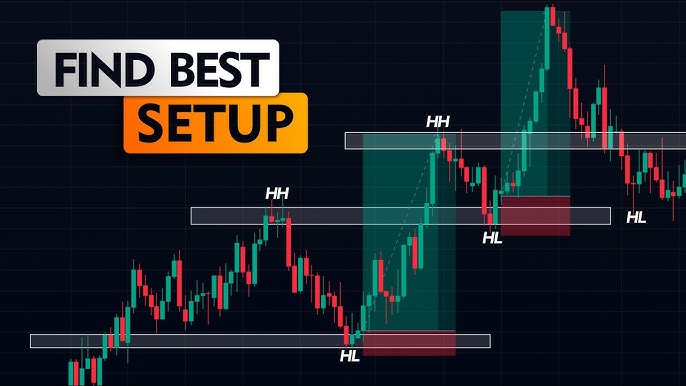
How to Identify Key Levels in Trading Like a Pro
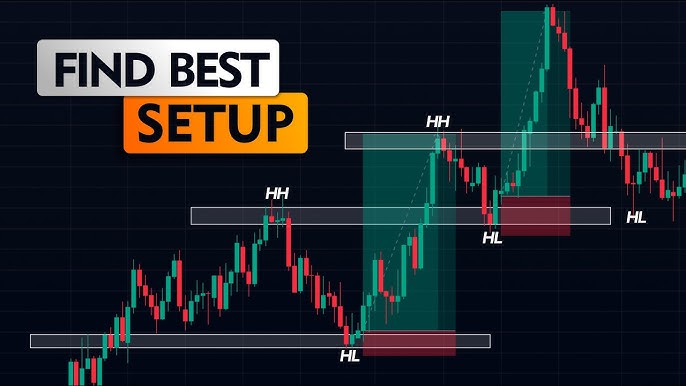
Spotting where the price is likely to stall, bounce, or break through is one of the most practical skills a trader can learn. Support and resistance are the invisible rails that guide the market day after day, and they appear across every asset class from currencies to crypto. Mastering these zones is less about fancy indicators and more about reading price action, supply and demand, and crowd psychology. If you want charts to speak to you instead of confuse you, the roadmap below will get you there without the usual clutter.
Importance of Support and Resistance
Many new traders ask what is support and resistance and quickly discover the answer is rooted in human behavior rather than mathematics. A support level forms where buyers have historically stepped in, while a resistance level is where sellers line up to defend higher prices. That push-and-pull dynamic repeats because large orders leave footprints; even algorithms monitor the same highs and lows the rest of us see.
When those historic lines are drawn correctly, they become reference points for everything from entry timing to stop placement; noticing key levels in trading early lets you plan rather than react. Traders who treat these bands as traffic lights—green to go, red to slow—often find their win rate rises simply because they avoid taking positions where the odds are thin.
Reading Price Action Around Levels
Support and resistance are not single ticks but zones, so you need to watch how candles behave as they enter those areas. A long-wick rejection followed by a strong close away from the level is a classic clue that supply or demand is still active. Conversely, small-bodied candles clustering right on the line can telegraph an imminent breakout because neither side has seized control.
When the price returns to a level that has already been tested three or more times, be alert: the market is advertising where liquidity sits, and stop orders often build just beyond that line. If the price finally slices through, the old support or resistance level flips polarity—support becomes fresh resistance and vice versa—giving you a second chance to trade with the new trend. You can apply this technical analysis to many pairs, from traditional forex to tracking the exchange rate from Bitcoin to RON.
Methods to Draw Support and Resistance
Textbook diagrams show razor-sharp horizontal lines, but real charts are messy. The smartest way to draw support and resistance is to start on the weekly time frame and mark obvious turning points, then drill down to the daily and four-hour charts to refine those zones. This top-down sweep keeps you from cluttering the screen with every minor bounce that looked important on a five-minute view.
If you are still unsure how to draw support and resistance levels in forex pairs that swing violently, try anchoring each zone across clusters of highs and lows rather than pinpointing a single candle. Those “bands” capture institutional order flow better than microscopic precision and reduce the frustration of seeing price miss your line by one pip before rocketing away.
Time Frames and Confluence
Seasoned traders rely on confluence—the overlap of separate signals—to confirm that a level is worth risking capital. A daily support that also aligns with a 61.8 % Fibonacci retracement and the 200-day moving average carries more weight than any of those signals in isolation.
| Time Frame | Typical Users | Reliability of Support and Resistance | Trade Frequency |
| Weekly | Position traders | Highest; levels can be valid for months | Low |
| Daily | Swing traders | High; ideal for setups lasting days | Moderate |
| Four-Hour | Swing & intraday | Medium; helps fine-tune entries | Moderate-High |
| One-Hour | Day traders | Lower; prone to noise | High |
The grid above is not a rulebook but a reminder that these levels can be stronger on higher charts even if you pull the trigger on lower ones. Matching multiple time frames keeps you from fighting the broader trend.
Using Moving Averages as Dynamic Levels
Traditional lines are static, but moving averages act as support and resistance lines that glide with the trend. The 20-period EMA hugs price action closely and is popular for short-term pullbacks, while the 50 and 200 SMAs outline the bigger picture. When the price respects a moving average repeatedly, it hints that institutions are keying off the same gauge.
Treat those averages as zones rather than hard edges; look for clusters of confluence where an upward-sloping 50 SMA meets horizontal support or resistance levels. If the price pierces the average only to close back above or below it, the false break can be traded much like a standard level rejection, giving you extra confirmation without additional indicators.
Trading Breakouts Versus Reversals
One of the most debated topics is whether to trade the breakout or wait for the reversal at support or resistance areas. Breakout traders enter as the candle closes beyond the level, betting on momentum to carry price to the next target. Reversal traders do the opposite, fading the move and aiming for mean reversion. Both approaches work if the context fits.
Follow this quick checklist before choosing a side:
- Check whether the market is trending or ranging.
- Measure recent volatility; tight ranges often precede explosiveness.
- Confirm volume or tick data is expanding on the attempted break.
- Look for higher-time-frame agreement; a breakout against weekly structure is suspect.
- Decide in advance where invalidation lies to cap risk.
Five bullet points are all you need; anything longer dilutes clarity and invites hesitation.
Risk Management at Critical Levels
The level is your friend until it breaks, so position sizing must reflect the distance between entry and invalidation. If your stop can be tucked below a clear support level, your risk is controlled; if the level is wide, size down. Never assume the price will behave just because you drew a perfect line.
Support and resistance are guidelines, not guarantees, and slippage can widen on news releases when the market is thin. Using alerts or conditional orders ensures you do not chase price into poor fills. Remember: hitting one solid trade is easier than clawing back from a string of oversized losers.
Common Mistakes When Drawing Levels
Rookies often flood the chart with lines, making it impossible to see which one actually matters. Focus on these levels that forced the strongest reactions: multi-week highs, flash-crash lows, and round numbers with extra psychological pull. Less ink equals more clarity.
Another frequent error is ignoring context; a support level that held during calm markets may crumble when central banks surprise with policy shifts. The market is alive, and resistance levels are not carved in stone. Update your map as new data lands, and never marry a line that price has obviously erased.
Continual Improvement Through Journaling
Keeping detailed notes of every trade allows you to identify patterns in your own behavior as well as in the market. Log the exact reason why you believed a support or resistance level was active, then study outcome versus expectation. Over time you will see which setups yield consistent payouts and which are statistical noise.
Nothing sharpens skill like brutal self-review. If the price has repeatedly spiked through your support and resistance zones before reversing, tighten placement or widen stops. Small tweaks based on real evidence can be the difference between treading water and compounding gains month after month.