
How REST and GraphQL Power the Flexibility of Headless CMS
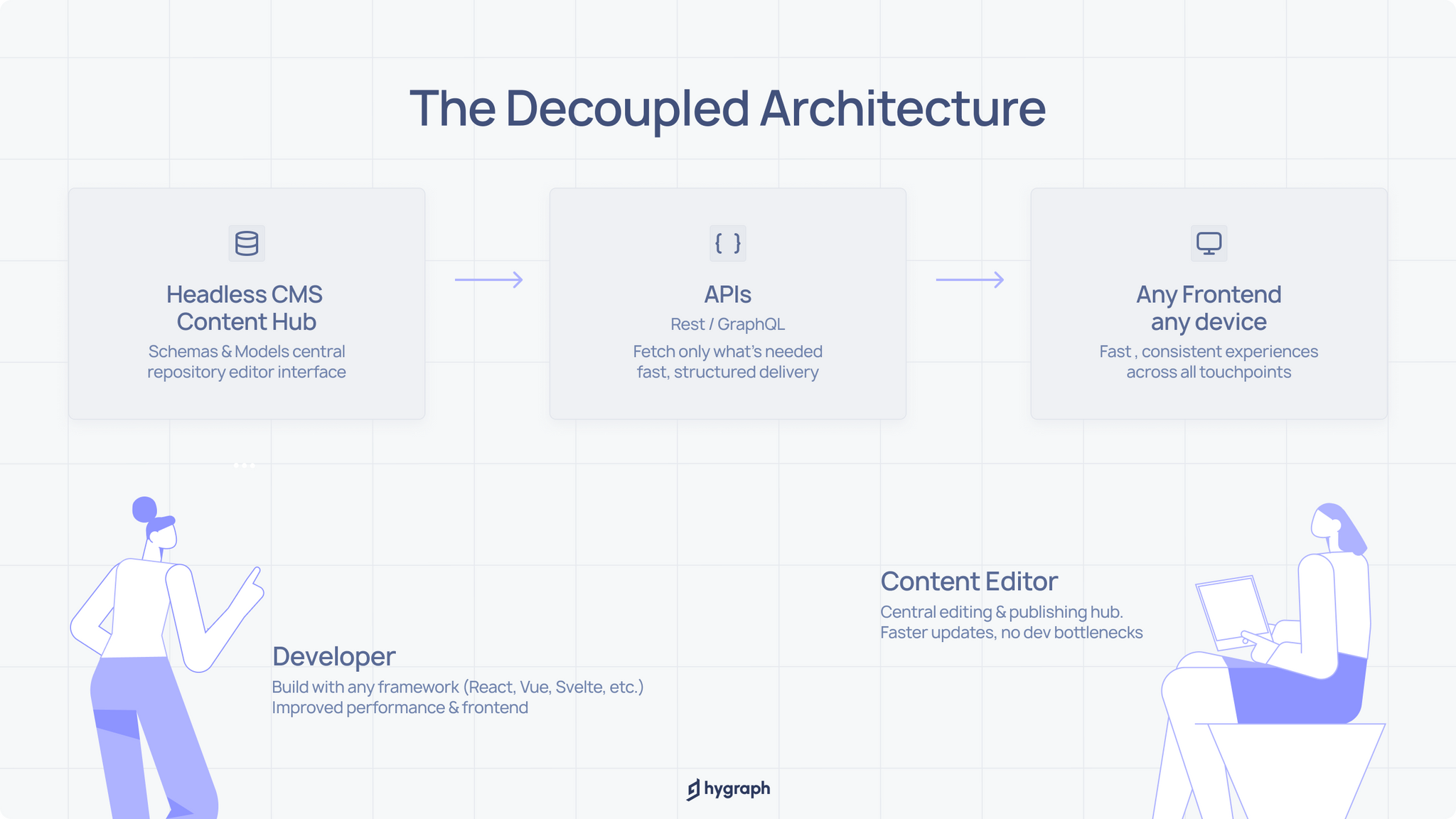
The demand for content delivery solutions that’s ever more flexible and efficient increases as digital ecosystems emerge across devices, platforms and end user experiences. The headless CMS architecture supports such demand by decoupling presentation from content creation while relying on potent APIs for information delivery, essentially, wherever it’s needed. Central to the flexibility of this process are two types of API technology – REST and GraphQL. Each serves an integral purpose in defining how developers will query, extract and deliver information across myriad experiences. Learning how REST and GraphQL operate – and their importance – sheds light on the growing reliance on headless CMS as an integral part of modern digital frameworks.
Why APIs Power Headless CMS Architecture
APIs serve as the lifeblood of a headless CMS, enabling content to be delivered without a standardized or intentioned presentation. If content isn’t attached to a mold, it can be provided through endpoints with structured data that developers can populate within any interface. Headless CMS benefits for enterprises become especially clear at this stage, as large organizations can reuse the same content pool across websites, applications, displays, voice assistants, and any other as-yet-invented presentation layer. This ultimate flexibility fosters a digital team to use the same pool of content and create a website, application, display, voice assistant and more. Creating content with such separation and universality is impossible with a monolithic system; developers are limited to the parameters set in such a situation. The technologies fueling a headless ecosystem are REST and GraphQL. Both approaches come with pros and cons that impact how scalable and interoperable headless environments can be.
What is REST and How Does it Expose Content
REST (Representational State Transfer) is one of the most commonly used standards for delivering content across the internet. It uses predetermined and well understood endpoints connected to specific content types/resources. Because it’s somewhat easy to grasp from a development perspective – along with being easy to implement, use, troubleshoot, maintain and document – it makes sense why early headless CMS options adopted REST as its foundation. REST is also known for its stateless requests which means that when requests happen, they’re independent of each other. If there are errors, they’ll persist in one-off exchanges, making the system more stable. While REST can return more data than needed on occasion, its systematic understanding is stable enough for most need cases digital teams have at their disposal. Exposing content in a headless environment is an easier task with REST due to its reliability, flexibility, universality and comprehensibility by general audiences.
How Does GraphQL Foster Flexibility
GraphQL (open-source query language) is dynamic. Instead of predetermined fields that require development to scope out what’s possible, GraphQL allows developers to ask for just what they need – even to the field level. This prevents larger payloads than necessary from being sent; it also increases efficiency when digital experiences become more omnichannel and contextually supported through different content types. Complex needs become streamlined through request efforts because a single request from GraphQL can retrieve what might take several requests from REST. Furthermore, as a schema-driven approach, GraphQL encourages stability among teams and between environments because fields can be previewed for where they’d work best; instead of guessing what’s available like in REST, GraphQL allows for testing for better growth and evolvability over time.
REST and GraphQL for More Flexible and Dynamic Endeavors
While both REST and GraphQL come with their advantages, many headless CMS solutions use both to give developers maximum flexibility. For example, REST may be used for straightforward endpoints where content will be presented, while GraphQL works on the more complex sides of things where dynamic presentation is crucial. Therefore, companies can decide which avenue makes more sense on a case-by-case basis. For example, REST may be better suited for a static build or a caching-heavy environment, while GraphQL may take the front seat for personalization efforts or complicated data-focused endeavors. When both are options, teams can work quicker without worrying about beneficial adjustments not being possible because only one API style is accessible. This is one of the main reasons why headless systems are such a good option for all use cases.
Improved Performance and Load Times Through Efficient API Access
APIs help determine user experience efficiently. Greater access to REST and GraphQL equates to quicker turnaround times, fewer bugs, and a more user-friendly experience. REST can facilitate aggressive caching options that help reduce server demands while facilitating rapid delivery. GraphQL provides more requested field-specific returns, eliminating unnecessary data transfer for a more customized effect. When both options are available, front-end frameworks can render content quickly and successfully, even on low-bandwidth situations or during high-traffic scenarios. As scaling becomes a necessity for global audiences and a range of devices, performance consistently becomes an issue that needs to be addressed. Thus, effective caching and precision access to desired information mean faster delivery with fewer demands on backend systems.
Development and Design Freedom for Developers Without Limitations
Headless CMS solutions do not assign templates to front-end users through API information rendering. Thus, developers are able to work with any front end imaginable. REST and GraphQL support modernized technology including any number of frameworks like React, Vue, Svelte, Angular, or static-site generators. This development freedom promotes innovation and experimentation since teams can select what’s best for performance, accessibility, or user experience without being limited to a CMS-based theme or design process. REST and GraphQL open avenues to otherwise limitless possibilities for what digital experience these developers can create down the line; there’s no need to create rendering bridges and front-end relationships if CMS-based standards already exist – all are developed along with whatever experiences reality needs for the future.
Supporting Omnichannel Digital Experiences at Scale
Today’s users experience brands across websites, applications, wearables, digital displays and other emerging technologies. Headless CMS solutions must support content across all channels, which is why REST and GraphQL support omnichannel needs. As API based solutions, content can be structured to fit each device without requiring manual duplication and redeployment, nor extensive redeployment efforts. By rendering content as reusable data, agencies can support intentional data use without losing consistency across the multilayered digital architecture. The more digital experiences emerge, the more omnichannel delivery becomes beneficial – and with REST and GraphQL, scalable support for such growth is established early on.
Facilitating Real-Time Updates and Dynamic Digital Experiences
Much of the digital experience today relies on dynamic capabilities. Static content fails to meet users where they are in the ever-changing world of data. Real-time updates become crucial. REST and GraphQL deployments support dynamic capabilities like subscriptions and webhooks, meaning developers can request changes when data is updated or updated as needed within applications. This delivers real-time currency without manual effort at different access points along the user journey. Interactive applications, dashboards, engines and data-heavy experiences emerge from such capabilities. With REST’s dependability and GraphQL’s dynamic efforts, headless CMS solutions find synergy and responsiveness in real-time contexts. As real-time interaction becomes critical across all industries, the ability to operate with real-time concerns in mind will pioneer future digital developments.
Bolstering Integration Opportunities throughout the Digital Stack
A headless CMS solution does not work in a silo – it’s connected to analytics solutions, e-commerce engines, localization solutions, personalization solutions and internal databases. REST and GraphQL serve as connector culture to these other systems by providing predictable access to content without excessive requirement. Each API acts as a means for an agency to devise a workflow that implements multiple services across the interconnected digital landscape. The more complicated the stack, the more convoluted an integration can become, but with REST and GraphQL at the helm, a consistently flowing pipeline supports access to content throughout all applications needing similar data – automation, consistency and scalability prevail across the comprehensive digital stack.
Why REST and GraphQL Will Fuel The Future of a Decentralized CMS
The way digital infrastructures are approaching the future suggests that there will be greater need for nimble, performant, and integration-ambitious delivery. REST and GraphQL provide the stability, agility, and accessibility that empower systems to keep up with the demands of the contemporary web. As frameworks shift, new devices integrate, and personalization becomes entirely AI based, REST and GraphQL will drive the future for another ten years. For organizations utilizing a headless CMS, this transformation is welcomed as it allows them to utilize these technologies without limitation. As demand for decentralized culture increases with countless systems across multiple digital touchpoints, REST and GraphQL will be the breathing components that drive system growth for seamless delivery without attachment.
Improving Developer Productivity Through Well-Established Data Constructs
REST and GraphQL each improve developer productivity through well-established constructs that empower predictability. REST constructs all access points in clear resource-based expectations while making development easier for less complicated use cases. GraphQL takes it a step further by allowing teams to coalesce their constructs around what they specifically need to query. However, with both systems at play, developers can hypothesize how something will operate without spending unnecessary time troubleshooting why it doesn’t work. This Developer Happiness increases when the sources accessed have uniformity across the board with fewer complications at delivery time. This ultimately fosters a better working environment for developers challenged by integration expectations but made easier when certain variables are in place.
Less Overhead/Technical Debt For Large Entities
Large organizations often carry technical debt caused by years of mishaps – working with systems and plugins that no longer exist or overly complicated plug-ins that create operational overload based on too many dependencies. REST reduces overhead by simplifying processes – if complex access methods aren’t necessary, there’s no reason for them. GraphQL eliminates high overhead as there won’t be as many requests made within proprietary code that limit other operations; access points are constructed in an all-in-one approach that addresses data demands without tying them down to separate entities. Such access and reduced complexity limit maintenance needs over time as organizations sustain change more easily without worrying about potential disagreements between builders and administrators. The more these complexities exist, the higher the risks of misalignments down the road. Access holds significant importance. Over time new organizational trends make decisions easier when the less complicated, the better.
Championing Personalization and Fluid User Experiences
Fluid content delivery systems based on data from various sources champion personalized experiences because they can shift based on user action, request, or contextual availability. GraphQL boasts a flexible response championing personal experiences by providing data exactly when and how it’s needed. At the same time, REST can provide stable access to a specific amount of information. Therefore, when used in unison, these APIs allow a headless CMS to champion interesting platforms, from personalized dashboards to specific content geo-targeting or recommendations. Personalization reigns supreme across industries as a modern, from retail to healthcare to travel and hospitality. Thus, fluid access through separate yet reliable means champions an experience that feels uniquely tailored to someone, even if it’s the same system accessed by thousands. Rest and GraphQL’s versatility empower developers to build responsive, data-driven systems that shift along the way.
Future-Proofing Content Delivery for a Multi-Device Dynamic Age
Today’s world is an all-digital trajectory leading to smart devices of the future – AR/VR interfaces, smart appliances, automobile screens and systems, even more dynamic interfaces that we can only imagine at this moment. REST and GraphQL ensure headless CMS delivery can adapt to whatever developers need without back-end adjustments. Their systematic approaches empower developers to dictate how content will appear based on the limitations and comforts of each device at hand. From quick-hitting data points for a watch to immersive, granular and rich media for a headset, APIs allow controlled consistency and flexibility. Future-proofing is established by creating transformation where organizations can create whatever they want without worrying about readjusting content set-up logistics; established relationships from input to output create transformation ease into whatever shape is necessary.