
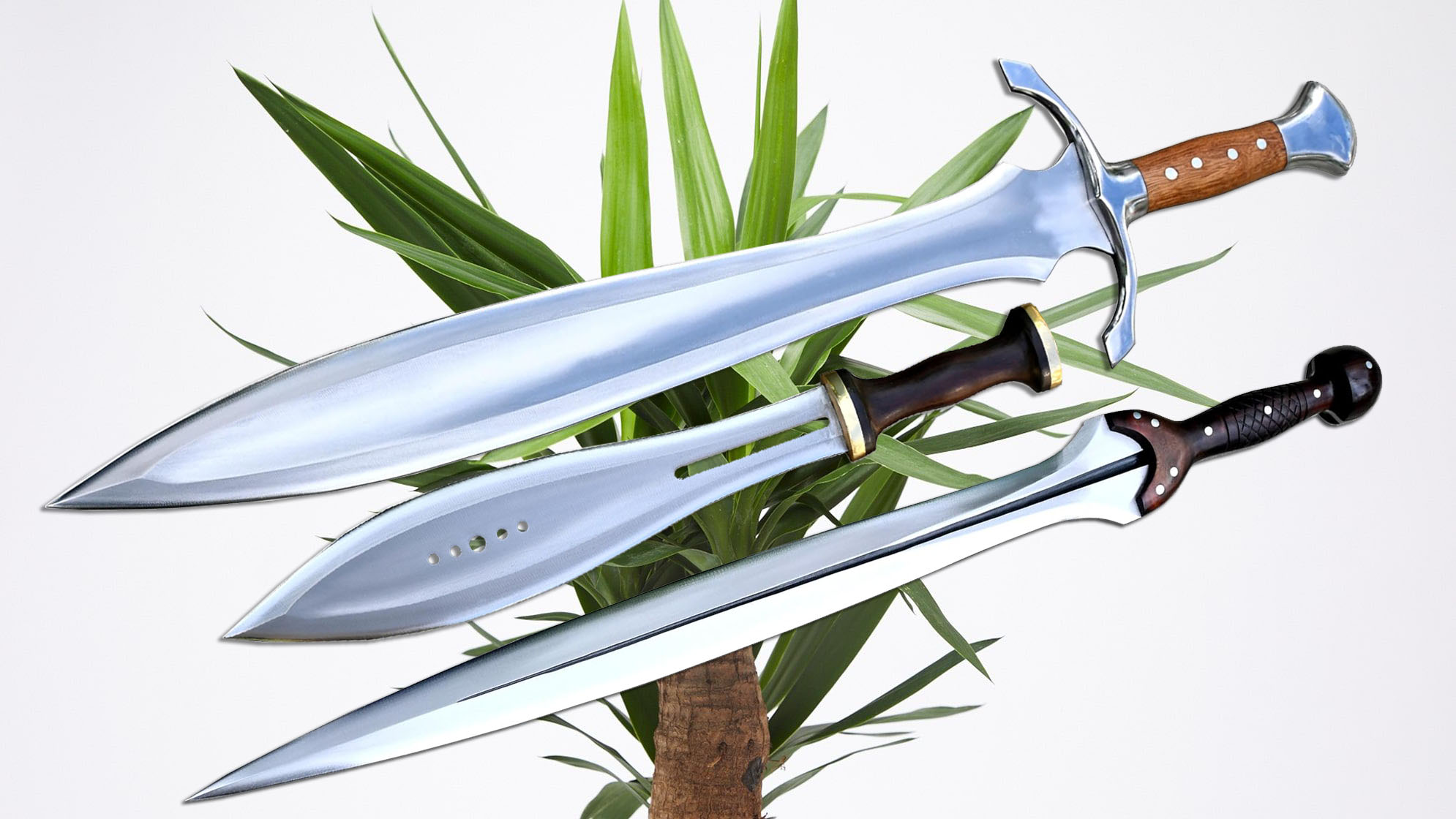
Edge of Innovation: Why Ancient Swords Still Outperform Modern Blades

Imagine this: we live in a world of high-tech factories, laser cutters, and computer-designed alloys. Yet, some swords made hundreds of years ago like the Damascus Sword with its rippling patterns and the Saber Sword with its graceful curve still rival or even outperform modern blades. Strange, right?
That’s the paradox of progress. With all our science, ancient swordsmiths created weapons that remain benchmarks for strength, sharpness, and beauty. They didn’t have labs, machines, or advanced tools, but they had knowledge, skill, and patience that turned hot steel into legends.
In this article, we’ll explore how the craftsmanship of these ancient blades blends history with modern material science and why the art of sword-making still holds lessons for today’s engineers and innovators.
Saber Sword and Damascus Sword: Metallurgy Beyond Its Time
The Saber Sword and the Damascus Sword show how old weapons combined beauty with brilliant engineering. The Saber, with its curved blade, polished finish, and balanced grip, wasn’t just for fighting; it was built for control, speed, and elegance. People still use it today in fencing, martial arts, and even films because of its style and precision.
The Damascus Sword, on the other hand, is famous for its wavy patterns and layered steel. Forged by folding metal hundreds of times, it became both tough and flexible, staying sharp for longer than most modern blades. Its design was so advanced it feels like an early version of today’s composite materials and nanotech.
Together, these swords prove that ancient craftsmen were more than artists they were engineers ahead of their time.
Science of Ancient Forging
Modern blades use materials like stainless steel and titanium, and techniques such as CNC machining and powder metallurgy. They are strong, resistant to rust, and easy to produce in large numbers.
But here’s the catch: modern blades are often too uniform. They can lack the flexibility, edge retention, and unique artistry that ancient swords like the Saber and Damascus blades naturally have. While modern engineering focuses on efficiency, ancient swords blended science with soul, creating weapons that were as beautiful as they were functional.
Why Ancient Swords Still Outperform
Ancient swords like the Damascus and Saber blades still outperform many modern weapons because of a smart mix of design and material science.
- Edge Retention: Damascus swords stay sharp longer thanks to their layered carbon steel.
- Flexibility & Strength: The Saber’s curve and Damascus layering absorb impact, reducing the chance of breaking.
- Functional Beauty: Every wavy pattern on a Damascus blade and every curve on a Saber serves a purpose, blending art with engineering.
- Self-Sharpening Effect: Damascus forging naturally forms tiny micro-edges, keeping the blade effective over time.
The big takeaway? When craftsmanship and physics work together, innovation becomes timeless.
Lessons for Modern Tech & Materials Science
Ancient swords like the Damascus and Saber blades aren’t just relics — they are lessons for modern technology and materials science.
The Damascus Sword is an early example of composite engineering. Its layered steel creates a perfect balance of strength and flexibility, similar to how modern engineers design advanced alloys and nanostructured materials. Each fold of steel distributes stress, much like how modern composites spread forces in aerospace panels or high-performance tools.
The Saber Sword teaches us about ergonomics and aerodynamics. Its curved blade isn’t just beautiful, it improves slashing speed, reduces resistance, and balances weight for precise control. Engineers today study similar principles when designing aircraft wings, sports equipment, and surgical instruments.
Today, AI and nanotechnology could “rediscover” these lost techniques. By simulating the folding patterns of Damascus steel or the curvature dynamics of Saber swords, we might create materials and tools even stronger, sharper, and more resilient than before.
The key lesson? Combining traditional wisdom with modern science can unlock innovation that feels both ancient and futuristic at the same time.